
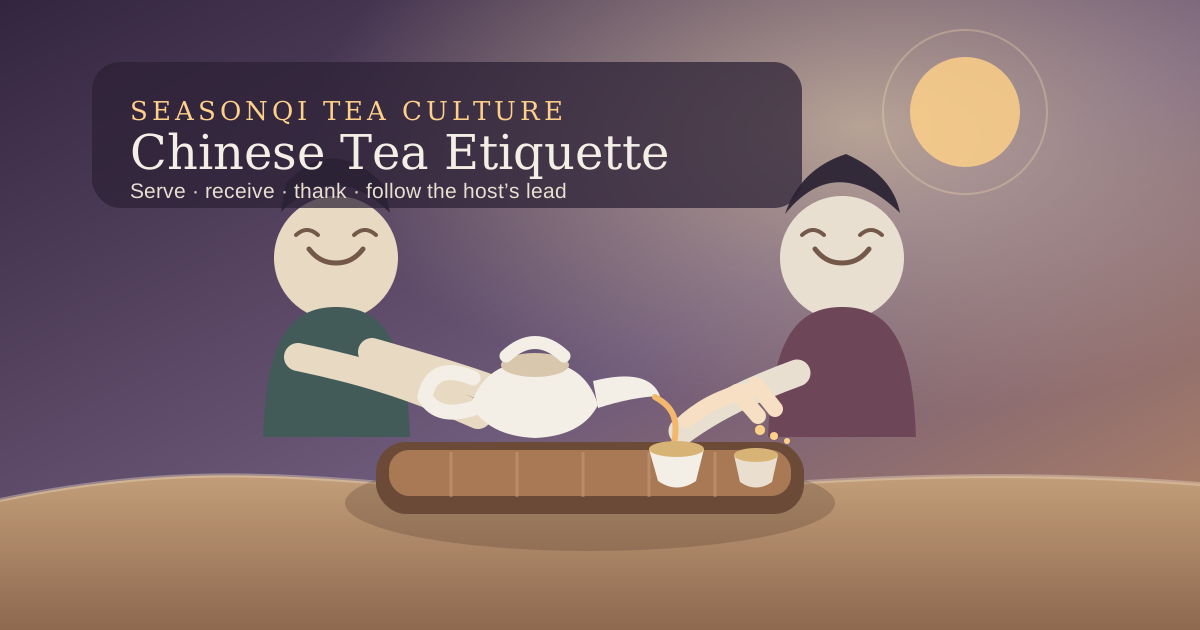
Chinese Tea Etiquette: How to Serve, Receive, and Thank Someone for Tea
Chinese tea etiquette is less about memorizing a ceremonial script and more about showing attention: offer tea before serving yourself, handle the cup with care, notice when others may want a refill, and thank the person who pours. This guide explains the small host-and-guest gestures a Western reader is most likely to encounter at home, at a tea table, during yum cha, or in a business setting.
What Chinese tea etiquette is really about
Tea in China is both a drink and a social action. The UNESCO description of China’s traditional tea practices includes not only planting and processing but also drinking and sharing tea. It notes that tea is served in homes, workplaces, tea houses, restaurants, and temples, and that tea-related activities help people greet guests and build relationships within families and among neighbours.
That broad range explains why “Chinese tea etiquette” cannot mean one fixed ceremony. A quick cup offered in an office may require nothing more than a thank you. A family gathering may give clear priority to grandparents. Cantonese yum cha has table customs that may not appear in northern China. A wedding tea ceremony gives serving order a deeper family meaning. The common thread is not uniform choreography. It is care for the people at the table.
UNESCO’s decision on the heritage element names values including modesty, harmony, comity, and respect. Those values are a better guide than a list of exotic-looking rules. If a gesture makes the gathering more attentive and comfortable, it probably serves the spirit of the table. If it becomes a performance that makes everyone self-conscious, simplicity is usually better.
Chinese tea etiquette for hosts
A host’s first responsibility is practical hospitality. The tea should be comfortable to receive, the table should allow conversation, and guests should not have to compete for attention. You do not need rare leaves, expensive clay, or a complete gongfu setup. For brewing equipment and short-infusion basics, the SeasonQi Chinese Tea Ritual Guide covers the setup. Here, the focus is what happens between people.
1. Offer tea before serving yourself
In many family, formal, and business settings, guests are served before the host. Older or honored guests may be served before younger participants. When the hierarchy is unclear, a calm left-to-right order or the order in which people are seated is more graceful than pausing to rank everyone publicly.
2. Pour modestly
Do not fill a small cup to the rim. A modest pour is easier to lift without spilling and leaves room for the heat of the cup. The exact fraction is not the important part; the practical principle is that generosity should not create discomfort. Place or offer the cup steadily, without sliding it across the table.
3. Use two hands when the setting is formal
Offering a cup or cup-and-saucer with two hands can signal care and respect, particularly with elders, first-time guests, ceremonies, or business visitors. In a casual gongfu session, the host may pour directly into cups already on the tray. The social meaning remains the same even when the mechanics differ: the pour should feel deliberate rather than careless.
4. Watch the pace of the table
Small cups are often refilled many times, but attentiveness is not the same as constant topping-up. Notice whether a guest is still drinking, has placed the cup aside, or has started to decline. A good host makes tea available without turning every pause into pressure.
5. Explain unfamiliar gestures lightly
If guests are new to Chinese tea, a sentence is enough: “Tap lightly if you want to say thanks while I pour, but you can also just say thank you.” Avoid making the guest feel that one mistake will insult the room. Hospitality should reduce anxiety, not create it.
How to receive Chinese tea as a guest
The guest’s role is equally simple: acknowledge the offer, handle the cup carefully, and respond to the host’s attention. You do not need to imitate every gesture you have seen online.
- In a formal setting, receive with two hands. If the cup is handed to you, taking it with both hands is a respectful default. If the cup is poured on the table, you can lightly steady it, nod, or say thank you.
- Wait for the host’s cue when the setting feels ceremonial. At an ordinary restaurant this may not matter. At a family or wedding tea ceremony, the order may carry meaning.
- Sip rather than rush. Small tea cups are designed for repeated pours. Drinking quickly is not automatically rude, but a slower pace gives the host and other guests room to share the session.
- Comment with proportion. A warm “this is fragrant” or “thank you for sharing this tea” is enough. You are not expected to produce expert tasting notes.
- Follow the table. If everyone is casual, be casual. If elders receive tea first and everyone pauses, join that rhythm.
When you dislike a tea, there is rarely a reason to make a dramatic face or deliver a public review. Take a small sip, thank the host, and decline later pours politely. The relationship matters more than proving your palate.
Why people tap the table when tea is poured
Finger tapping—sometimes called tea tapping or finger kowtow—is a quiet way of thanking the person who pours. It is especially familiar in Cantonese dining and Hong Kong yum cha, where conversation continues while small cups are refilled. A light tap avoids interrupting the exchange every few moments.
The simplest version for a visitor is to rest two fingers near the cup and tap the table gently once or twice after a pour. Do not pound the table, click your nails, or turn the gesture into a demonstration. A spoken “thank you” is always acceptable, and in many settings it is more natural than tapping.
Some etiquette explanations assign different forms to different relationships: two fingers among peers, one finger when a senior thanks a younger person, or a curled hand when a younger person thanks an elder. These distinctions are not applied consistently everywhere. If you have not grown up with them, a light two-finger tap or simple verbal thanks is enough.
A popular story links the gesture to Qing emperor Qianlong travelling in disguise. In the story, attendants could not kneel when the emperor poured tea because doing so would reveal him, so they represented a bow with their fingers. The story is memorable, but it should be presented as legend. A scholar quoted in a BBC account noted that well-preserved records do not confirm the episode. The etiquette is real; the famous origin story is not established history.
Serving order: guests, elders, family, and business settings
“Who gets tea first?” has a contextual answer. In many formal settings, the honored guest comes before the host, and older people come before younger people. This expresses respect without requiring a speech. In a mixed group where no clear seniority exists, serving around the table in a consistent direction keeps the moment comfortable.
At family gatherings, younger relatives may pour for elders. At Cantonese yum cha, one family member may take responsibility for ordering the tea and keeping cups filled. At a business meeting, the host or staff member may serve visitors first. In a wedding tea ceremony, newlyweds commonly serve parents and senior relatives as an expression of respect and gratitude, but the sequence is adapted by region, household, diaspora community, and family structure.
Do not apply one hierarchy mechanically to every table. Gender-first rules sometimes circulate in etiquette lists, but age, host-guest roles, local custom, and the practical seating arrangement may matter more. The respectful choice is the one the household or host actually uses.
Refills, empty cups, and politely declining more tea
Repeated refilling is common because Chinese tasting cups can be small and the same leaves may be infused several times. A refill is usually an act of attention, not a demand that the guest consume an unlimited amount.
As a host, wait until the cup is low or the guest signals interest. As a guest, you can accept with a nod or finger tap. To decline, say, “Thank you, I have had enough,” “No more for me, thank you,” or “I’m taking a pause.” Lightly covering or steadying the cup while speaking can reinforce the message, but clear words are better than relying on an invented universal signal.
In some Hong Kong restaurants, tilting or lifting the teapot lid signals staff that the pot needs more hot water. This is a useful regional restaurant custom, not a rule for every tea house. If you are unsure, ask the host or server.
If a guest is sensitive to caffeine, pregnant, taking medication, or managing a health condition, let them choose whether and how much to drink. Offer water or a clearly identified caffeine-free infusion without pressure. True tea from Camellia sinensis generally contains caffeine; an herbal infusion is a different category and should be named by its ingredients rather than assumed to be suitable for everyone.
How etiquette changes by setting
At someone’s home
Home tea is often the least scripted. Accept the first offer if it suits you, thank the host, and watch how the family handles refills. Shoes, seating, snacks, and conversation may matter more than specialized tea gestures.
At yum cha or dim sum
Yum cha means “drink tea” in Cantonese and belongs to a shared dining tradition. Tea tapping, serving elders, sharing dishes, and signalling for hot water are especially visible here. Treat these as Cantonese and Hong Kong table customs rather than a template for all Chinese meals.
At a tea house or gongfu session
The host may use a gaiwan, fairness pitcher, tray, and many short infusions. Cups may remain on the tray while the host pours. Keep hands clear of the brewing area, wait until the cup is offered or placed, and ask before handling teaware. The point is attention, not performance.
At a business meeting
Business tea is usually about hospitality and relationship-building rather than testing whether a visitor knows every custom. Receive the cup carefully, keep your phone out of the central interaction, thank the host, and do not read too much into every refill. Company culture and the meeting’s level of formality matter.
At a wedding tea ceremony
Wedding tea can be a structured family ritual in which the couple serves elders and receives blessings or gifts. If you are participating, ask the family or coordinator about order, forms of address, kneeling or standing, cup handling, and photography. Do not assume a video from another region or family provides the correct script.
Common Chinese tea etiquette mistakes
- Calling every tea gathering a “tea ceremony.” Many sessions are simply hospitality or skilled brewing. Formality varies.
- Claiming one rule is universal. Cantonese yum cha, Chaoshan gongfu tea, wedding tea, ethnic minority traditions, and casual office tea are not identical.
- Performing the Qianlong story as proven history. Call it a popular legend.
- Overfilling cups. A brim-full hot cup is harder to receive comfortably.
- Serving yourself first without noticing others. At a shared table, offer guests or elders before taking your own pour when practical.
- Forcing refills. Care includes noticing when someone has had enough.
- Pointing a teapot spout at someone for a long time. Interpretations vary, but turning the spout aside when the pot rests is an easy courtesy and reduces accidental spills.
- Making health promises about the tea. Tea may carry cultural associations, but hospitality does not require claims about sleep, digestion, immunity, or other medical outcomes.
- Using a phone throughout a hosted session. A quick necessary check is different from withdrawing from the conversation.
- Correcting the host’s tradition. A visitor’s online checklist should not outrank the customs of the people at the table.
A five-step practice for your next tea invitation
You can remember Chinese tea etiquette without memorizing dozens of rules:
1. Pause and observe
Notice who is hosting, who is older, how formal the setting feels, and whether cups are handed over or poured in place.
2. Receive with care
Use two hands when the moment is formal or when the host hands you the cup. Otherwise, steady the cup gently and keep the brewing area clear.
3. Thank simply
Say thank you, nod, or use a light finger tap if others are doing so. There is no prize for the most elaborate gesture.
4. Match the pace
Sip, converse, and allow the table to develop its rhythm. Ask questions about the tea if the host seems eager to share, but do not turn the gathering into an interrogation.
5. Decline clearly when needed
A warm, direct sentence is respectful. You do not owe anyone another cup because you are worried about missing a secret signal.
Frequently asked questions
What is the most important rule of Chinese tea etiquette?
The most useful rule is to be attentive rather than theatrical: serve others before yourself, handle cups carefully, thank the pourer, and follow the host’s lead because customs vary by region, family, and setting.
Why do people tap the table when tea is poured?
Finger tapping is a quiet way to thank the person pouring tea, especially in Cantonese and Hong Kong yum cha settings. It is not universal, and a spoken thank you or a small nod is always appropriate.
Should I receive Chinese tea with two hands?
Using two hands is a respectful choice in formal, ceremonial, family, or business settings. In a casual restaurant, gently steadying the cup or offering a small nod can also be natural; observe the host and the table.
Who should be served first at a Chinese tea table?
In many formal settings, honored guests and older people are served before the host or younger participants. The exact order varies by household, region, occasion, and whether the gathering is casual or ceremonial.
How can I politely decline more tea?
Say thank you and that you have had enough, or lightly cover or steady the cup while speaking. Do not rely on an invented universal hand signal; clear, warm words are safest when you do not know the local custom.
What this article is not
This article is not a universal rulebook for every Chinese family, region, ethnic group, restaurant, tea house, workplace, or ceremony. It is not a substitute for listening to your host, and it is not a medical prescription or a treatment for any condition. Tea etiquette concerns hospitality and cultural practice; it cannot assess your constitution or prove that a drink will change your health.
If you are pregnant, take medication, live with a chronic condition, have a caffeine sensitivity or allergy, or experience persistent or concerning symptoms, consult a qualified healthcare professional. Choose drinks that fit your needs, and do not delay professional care because of a cultural wellness story.
SeasonQi ritual prompt
At your next shared cup, choose one quiet act of attention: pour for someone else first, receive the cup with both hands, or thank the pourer without interrupting the conversation. Let the gesture stay small. The purpose is relationship, not performance.
Safety and scope
This article is for educational and cultural purposes only. It is not medical advice, diagnosis, prevention, or treatment, and it is not a substitute for a qualified healthcare professional. Tea contains varying amounts of caffeine, while herbal infusions have different ingredients and safety considerations. Consult a licensed clinician about pregnancy, medication, chronic conditions, allergies, persistent symptoms, or significant changes to what you consume.